
Progress so far
Thanks to funding from the Nature Restoration Fund (managed by NatureScot), and working with Native Woods Cooperative we have completed the development phase for the project, which involved:
- engaging with local land managers
- mapping INNS within the project area
- supporting a ‘rainforest apprentice’
- holding local events to engage, educate and inform our local community about the importance of Appin’s rainforest, including engaging with issues around deer management
- undertaking a feasibility study for a community deer larder.
ACDT has also been participating in the development of a local Deer Forum convened by NatureScot.
Funding from the Scottish Government’s Rainforest Restoration Fund (managed by NatureScot) and further NRF delivery funding has enabled us to begin the delivery phase. This phase has already seen:
- the development of a local squad of 10 employees and over 30 volunteer team members to carry out our INNS eradication programme
- further development of plans to deliver a local deer larder
- further engagement with Appin Deer Forum to enhance deer management in the area
- the recruitment of a Project Manager and Communications Officer to support the project
- the creation of Appin Forest Services CIC, sitting within ACDT, to deliver the project
And we’re just getting started! Follow along on our journey to see what’s next for the Appin Rainforest Regeneration Project.
Contact details:
Victoria Kynaston – Development Officer, email victoria@appin.scot
Barry Harper - Volunteer Lead, email barryh867@gmail.com

Photographer John MacPherson, with thanks to the Atlantic Scottish Rainforest Alliance.
Scotland’s temperate rainforest is as important as tropical rainforest, but even rarer. Also known as Atlantic woodland and Celtic rainforest, it is made up of native woodlands found on our west coast in the so-called “hyper-oceanic zone”. Here, high levels of rainfall and relatively mild, year-round temperatures provide just the right conditions for some of the world’s rarest bryophytes and lichens. Only 30,000 hectares remains in Scotland, an area roughly the same size as Edinburgh.
Our rainforests are faced with multiple large-scale threats, and if we don’t take action, we risk losing this important habitat completely. A big threat is invasive species such as Rhododendron Ponticum. Too many or too few grazing animals also threaten these special places. To add further pressure, climate change is predicted to shrink the narrow climatic zone that this rainforest relies upon.
Appin is home to significant areas of Scotland’s rainforest remnants, including the Glen Creran Special Area of Conservation (SAC), which is threatened by invasive species and inappropriate grazing levels. Part of this SAC has already been included in a rhododendron control programme, and this project will consolidate and expand upon this work.
Regeneration of the Scottish Rainforest will increase biodiversity and contribute to carbon capture essential in mitigating the effects of climate change. In addition, restoring and expanding this unique habitat will provide new employment opportunities, recreation and leisure activities, and allow people to enjoy the magic of the rainforest for generations to come.

Photographer John MacPherson, with thanks to the Atlantic Scottish Rainforest Alliance.
Become involved
Invasive species can only be dealt with at a landscape scale: if some plants are left, then they will spread out again, and put at risk the benefits that control can deliver. This is why we are asking you to become involved in the project.
So what is involved in the development phase?
- Community engagement
- Trainee recruitment
- Landowner discussions
- Survey of Appin land
- Mapping of non-native invasive species
- Habitat impact assessment to find out the effect of deer and other herbivores on the rainforest
- Planning for delivery phase- applying for funding, securing the mechanisms needed for non-native removal and management
So what are the non-native invasive species threatening the remnants of rainforest? In Scotland, four invasive plants cause the most damage:

Rhododendron
Rhododendron Ponticum
Invasive rhododendron colonises our rainforest fast, outcompeting native trees and shading out rare plants, resulting in significant biodiversity loss. It also spreads onto open ground, threatening farming livelihoods.

Japanese Knotweed
Fallopia japonica
Japanese Knotweed can cause extensive damage to both property and our natural environment. Its roots can grow three metres down into the earth, and seven metres across. These thick, strong roots will spread rapidly, letting almost nothing get in their way.

Giant Hogweed
Heracleum mantegazzianum
Giant Hogweed is a poisonous species which competes with native plants and disrupts local ecosystems. Its’ rapid growth and ability to colonise disturbed habitats make it a threat to native biodiversity as well as human health.

Himalayan Balsam
Impatiens glandulifera
Himalayan Balsam causes a major problem as this plant overshades and outcompetes smaller, native plants. Over time, native species die, leaving only Balsam which dies back in winter to leave bare ground, particularly exposing riverbanks to the risk of erosion.
Two other species also have great potential to be invasive in certain habitats:

American Skunk Cabbage
Symplocarpus foetidus
American Skunk Cabbage, or Symplocarpus foetidus, can quickly begin to establish a large infestation, suffocating other species. The large growth boom can also end up blocking small waterways.

Giant Rhubarb
Gunnera tinctoria
Gunnera tinctoria, also known as Giant Rhubarb, originates from South America. It is becoming widespread in western Scotland, covering areas of grazing land and natural habitats.
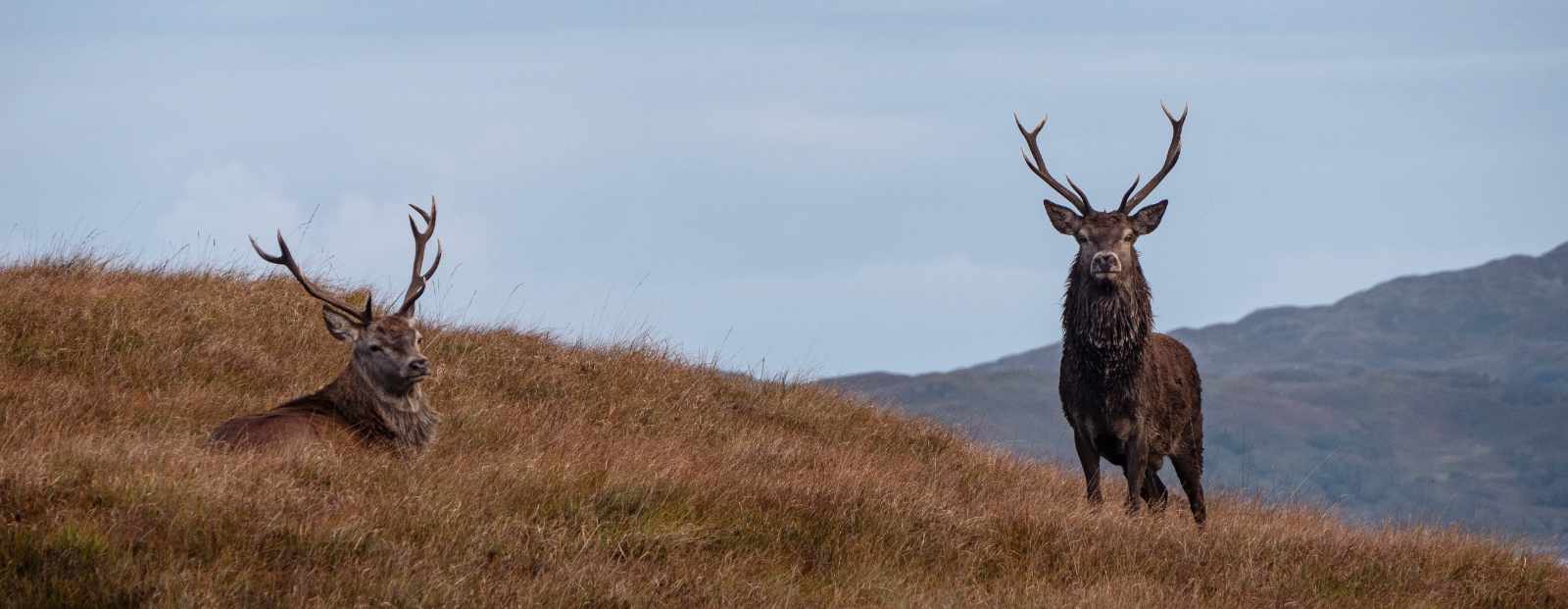
Appin is home to Scotland’s two native deer species the Red deer and the Roe deer. These iconic animals are an important part of the area's natural heritage playing a vital role in the local environment while supporting rural employment and the local economy. They are an important resource being an integral part of the natural environment, supporting local employment, income and provide an excellent source of food.
Part of the rainforest restoration project involves the management of herbivores- deer being the most numerous and widespread in Appin. When deer numbers and behaviours are out of balance with their habitat, they can cause unsustainable damage through erosion and excessive grazing or browsing of trees, shrubs, field layer and lichens.
An area-wide Deer Management Plan has been developed to support this project with additional aims of reducing agricultural damage, improving wild deer health and herd structure, minimising deer/vehicle collisions and preventing damage to the lived environment and infrastructure.
The plan brings together landowners, deer managers and the local community to help create the conditions needed for native woodland, plants and wildlife to recover. Its aim is to maintain healthy, sustainable deer populations that are in balance with the habitats they depend upon.
Click here to download the plan (PDF)
Get in touch
If you would like to comment or get in touch, you can email or call/message the Deer Management Lead:
Innis Finlay
07345 572367

What next?
The delivery phase will continue to focus on restoring and protecting Appin’s rainforest. This includes:
- Continuing our programme to remove invasive non-native species, prioritising Rhododendron ponticum
- Continuing to develop local approaches to deer management, including plans for a Community Deer Larder and launch of a Deer Incentive Scheme
- Creating opportunities for volunteers and members of the local community to get involved in practical conservation work
- Continuing to engage, educate and inform the community about Appin’s rainforest and the species and habitats it supports
- Continuing to support local training and employment in the rainforest
How can members of the community get involved?
There are lots of ways to support the project:
- Come along to community engagement events to learn more about the project, Appin’s rainforest and the special species we need to protect
- Get involved in volunteer opportunities and practical conservation work - contact us to find out more
- Support survey and monitoring work - more information to come on this!
- Share information about the project with friends, neighbours and others in the community
- Get in touch with us if you have ideas for future community activity. Contact our Volunteer Lead Barry Harper, barryh867@gmail.com.


Opportunities with us
Watch this space for future job oportunities with the Rainforest Regeneration project.